
U M M R
museo di storia dei sistemi a microprocessore
Sito web sempre in costruzione - ultimo aggiornamento: 25.11.2023
Website always under construction - last update Nov 25, 2023
My museum currently hosts: 232 complete systems (PCs, workstations...), 329 telecom and networking items, 409 mass storage items, more than 2,600 chips and CPUs, more than 1,000 cards, boards etc., 200+ vintage boxed softwares, more than 550 computer-related books, 150+ vintage computer magazines, 400+ vacuum tubes... and it's growing larger
More than 1,600 items in this web site

Truth for Giulio Regeni campaign
Verità per Giulio Regeni (pagina di Amnesty International Italia)

Benvenuti - Welcome
Latest additions (Jan/Nov 2023): Cray-3 GaAs VLSI uncut wafer, 3Com TokenLink Plus boxed, Intel Overdrive 486 keychain, HP FDDI EISA card (early version), IBM lucite paperweights (SLT, SLD and MST modules), IBM unknown VLSI chips prototypes, IME calculator low-capacity magnetic core memory card, Honeywell Digital Flight Guidance Computer (68RC020 CPU), IBM 4341 cache card, Matrox IM-1280/AT, IBM paperweight with SLT modules in different stages of production (from wafer to the complete card, Burroughs DC106-A decimal counter, CDC 7600 logic module, SGI VPro chipset, Univac thin-film memory sheet, DEC E2065-DA dual Alpha 21164 board, Ampex core memory cards, IBM DASD Head Technology paperweight, Hitachi F7-MP5600 MCM, Hitachi HITAC M220K MCM, Siemens Nixdorf Primergy 350 P60 CPU, DEC VAX 11/750 memory controller card, NEC Multibus CPU card (D8086D processor), Very low S/N LSI Logic EPIC-90 ASIC for TRW, MST-style IBM card with AMS 6001 1 kbit DRAMs
Latest additions (Apr/Oct 2022): Raytheon MilVAX CPU module, Prime 2950 CPU board, Prime 4000 CPU board, DEC L4000/KA670 CPU, ATEX Unibus board with DEC J11 CPU, wafer of IBM 288 kbit DRAMs, prototype board with IBM-made radiation hardened ASIC, Texas Instruments paperweight (1 Mbit bubble memory chip), Rockwell/Collins CMC-7000, IBM promotional card with early (1958) SMS module, IBM 093 Sawmill disk cutaway, IBM 62EH disk unit, IBM 16 Mbit DRAM samples, Multibus-II military board with 386DX-16, IBM POWER5 8-way MCM, Kingston SLC/NOW!, Cyrix FasMath Numeric SIMM, 8'' wafer of IBM CMOS image sensors, i960HD-66 sample, HP 1600A and 1611A LSA, Honeywell 316 logic cards, Olivetti ELEA 4001 logic cards, USSR-made EVM SM-1 magnetic core memory board, Honeywell Series 200 RAM card, IBM RS64-A10 Cobra CPU prototype, RCA paperweight with early CCD chip, HP paperweight with HP 83000 2-channel Test Processor Module, DEC PostScript processor card, Intel IXP2350 & IXP2850 Engineering Samples, IBM 5251 logic boards, IBM magnetic core ROM (SMS card), Intergraph GLZ-2 OpenGL card, USSR-made MGA/CGA clone, DEC CT100 Color Bitmap card prototype, Univac and Ampex core memories with schematics, I-Cube IQ320 FPIC engineering sample
Latest additions (Jan/Feb 2022): ADSP-101 SHARC prototype, AT&T/Bell 6 inches wafer, IBM CMOS VLSI 4 inches wafer, USSR-made photolitographic mask, USSR-made magnetic core ROM (mid '70s), many x86 motherboards
Latest additions (Oct/Nov 2021): DEC T2017 Vector Processing Unit, DEC T2015 and T2051 CVAX CPUs, Intergraph board with Clipper C3, wafer of MIPS R3000A CPUs, wafer of SOFRADIR IR CCD sensors, wafer of TI ThunderLAN-III controllers, IBM Essonnes' keychain with MST module, Cray 1 card (white Fairchild ECL chips), Motorola MC88100-based CPU card, Russian avionics card (MIG-35?) with two ADSP-2101, HP 9000/710 motherboard, IBM Luna-C DRAM prototypes, IBM VLSI blue taped wafer, DEC 4K & Litton 8K core memories, USSR-made silicon wafers, EDVM-3P calculator logic module, another VAX 9000 MCM (P1003 multiplicator), Microprocessor Forum (1992) large paperweight with many embedded chips of that year, Elektronika MC-085/50 cards (soviet clone of DEC Professional 350), RCA 301 and 501 printed circuit modules
Latest additions (May/Jul 2021): IBM PS/2-90 CPU Complex Type 1 w/486DX-50 Upgrade, IBM PC Voice Communication Option (VCO), IBM GXT550 Graphics Card, Verticom MX-8 Graphics card, Avid Blue Ice card, Nortel Nubus videoconferencing card, DEC PXG 3D Graphics card, HP HCRX-24 Graphics card, Heurikon VME Graphics engine, Number Nine Imagine 128, Data Products and Standard Memories core memory cards (16K×16), Burroughs' 6 MB ECC RAM card, DEC W631 FDDI card, Honeywell Symbol Generator SG-805, SELEX S&AS IFF Signal Processor Unit, DEC PMAGC-C graphic card, DEC L2004 geometry engine (VAXstation 3540), TEMPEST-compliant DTC EISA controller, IBM 3172 Channel Interface Card, DECserver 500 CPU card (NVAX), EMM Megabyte Core memory board, Intel Inboard 386/PC, Intel 386DX motherboard with 287 FPU, Intel Aboveboard-8, IBM and Hypertec MCA RAM expansion cards
Latest additions (Jan/Apr 2021): IBM GTD paperweight with MOS memories, unknown IBM hybrid circuit module, Intel Pentium MMX wafer, AT&T promotional card with 256 kbit and 1 Mbit DRAM chips, unknown vintage discrete logic modules, Projected Map Display by Elliott Bros. (SEPECAT Jaguar), DECCA radionavigation receiver 990-AB/2, Sperry Flight Director Computer Mk. 7, Honeywell Symbol Generator processor, IBM PC RT 6150 AFPA option card, 8th Microprocessor Forum (1995) leather binder with embedded chips, IBM PS/2 9595 CPU Complex Type 3 M, DEC KA550 CPU (VAXft mod. 410), Taxan TX-1280 graphic card
Latest additions (Sep/Oct 2020): whole new page on AVIONICS, Ferranti Ground Position Indicator Mk.4, Ferranti Projected Map Display, Boeing AH-64 "Apache" attack computer CPU, Intel Pentium 4 "Prescott" paperweight, National Semiconductor photolitographic mask, Hughes Avionics card with Sylvania SUHL flatpacks, Amdahl 5860 MCC board, DEC KA65A-AA CPU board (Mariah CPU, prototype), Standard Radio all-tube Localizer/Marker receiver, DEC E2065-DA board with 2 Alpha 21164-625 CPUs, IBM GPD paperweight with 32- and 64-kbit DRAM chips, Amdahl 470/V6 MCC multichip module, military-grade board with 386EX-25 CPU, Tandem Computer paperweight with CISC CPU
Latest additions (Jun/Aug 2020): Evans & Sutherland ESIG-3000 card, E&S ESIG-1000 card, Abekas Mira dual CPU card, C-Cube VideoRISC multiprocessor VME board, IBM XMA card, Elbit Systems 68040RC CPU card, DEC VT-240 board, AT&T 3B25 CPU board, Evans & Sutherland 2xAMD Am29000 board, Amdahl 470 V6 paperweight, Amdahl 580 paperweight, Amdahl card with Fujitsu gate arrays, Solbourne SPARC board, Paradise MGC controller, IBM ESDI controller for PC/RT, Fortune Systems disk controller, AST VT-220 terminal emulator, Motorola MVME165, IBM Turboways 100 ATM adapter, IBM FDDI Microchannel Adapter, Bull DPX-2/360 CPU, Italtel CPU board with 68040RC-33 and Transputer T425, Siemens bubble memory card (Memtech 7110), IBM PowerPC 604 CPU cards, Bull DPS wire-wrapped card, MIR-2 calculator (USSR) circuit module, Cray Y-MP paperweight with 2.500 gate ECL array, HP 9000/710 motherboard, Wang VS-5000 CPU board, IBM PS/2 70-A21 motherboard, IBM PC AT 5170 motherboard, GEC Marconi FDAU (2 different), >30 misc new boards/cards (many vintage RAM cards), Altos 3068 CPU, Unisys 5000 CPU board (4xMotorola 68020-16), many vintage large RAM boards, Compaq VDU controller, IFF Mark X NATO transponder (Cossor TR.4585), Intel paperweight with different early EPROMs, IBM System/370-145 MST card, unidentified Cray/SGI processor prototype with MIPS R10000-195 CPU (Origin?), Nixdorf 8860 & 8870 CPU blocks, German computer module with Valvo OC71 germanium transistors (1958), Sundstrand UFDR Flight Recorder (8080-based), Smiths Industries solid state FDR, Cray 3 litho mask, Cray Threadstorm 4 CPU, Cyrix 6x86MX wafer, Ramtron FM1208 FeRAM wafer, Mullard FCH131 DTL logic wafer, many Rockwell & others silicon wafers, NS 32532-25 CPU, Sony Cell Broadband Engine sample, IBM SDLC/V.32 MCA card, TI Hi-Res PC graphics adapter, IBM MPEG-2 chipset, 2 AMI photolitography masks, Burroughs B7800 CPU card
Latest additions (Jan/Mar, 2020): IBM paperweights (Memory System Division, Bromont, System 4300), BIAX USSR-made memory plane, AMi QIP prototypes, USSR-made vintage CCDs, USSR-made bubble memory module sample, unknown vacuum tube (E92CC) computer module, Burroughs AN/FST-2 logic inverter module, Burroughs minicomputer large board w/Motorola LSIs, AMD & AMi IC masks, Radiation Inc. NOR hybrid logic module
Latest additions (May/Nov, 2019): IBM 3021 Data Cell, various network cards, Sun Enterprise 10000 CPU Board, IBM RIOS-1 board, IBM PS/2 Model 70 E61 motherboard, two tube-based decimal counters, Silicon Graphics GE-4, GE-10 (Reality Engine 2), GE-12 (Infinite Reality), SGI Personal IRIS graphics board, SGI Indigo Elan graphics, ICE GreenICE DSP card, Silicon Graphics XZ Extreme card set, Intergraph Intense3D Realizm II, IBM 8514/A, Truevision TARGA+ MCA, Truevision AT-Vista, Sigma Designs Laserview, Vermont Microsystems IM-1024, Matrox MVP-AT, IBM Token Ring cards, Sun 4/110, 4/150 and 4/330 CPU boards, IBM XGA, IBM Image-I Adapter, various PC graphics cards, Apollo Domain Token Ring card, Sequent Symmetry dual Pentium 60 CPU board, IBM Image Adapter/A, Matrox MG640, IBM PC Network Adapter broadband & baseband, Novell Disk Coprocessor, NCR WaveLAN, 3Com LAN adapter (1983), HP Visualize FX-2, FX-4 & FX-6, Cmosis/Leica medium-format 30MP prototype sensor, Sun UltraSPARC-h20 CPU, HP 1AA1-6004 CPU, HP Superdome Cell board (PA-8900 CPUs), mil-spec Elbit CPU board with MG80386SX-16/B, IBM System/38 5382 CPU board, TriQuint GaAs VLSI chip, LaserData Laserview MCA card set, VAX 9000 Aridus MCU, 3 barrier grid storage tubes (USSR LN-12, Raytheon QK-464, Warnecke RW-1), Cray Y-MP C90 VLSI gate array
Latest additions (Jan/Feb, 2019): two flying-spot scanning CRTs, Tektronix T-7610 tube, IL-17 USSR pulse generator CRT, Raytheon Charactron, USSR-made hybrid logic module for the MIR space station's onboard computer, NCR Century series paperweight, HP1000 A900 VLSI chip, i486DX/2 wafer, Olivetti T2B-PR, USSR-made BIAX military-grade memory plate, USSR-made B1520 ECL gate array, Burroughs B4800 card, USSR-made "Karat" military computer module, various core memory and core-rope ROM cards, 512-bit TDK core memory, 8'' wafer of Intel Pentium P54CS (here), wafer of Intel Pentium 4 CPUs (core Willamette, here), framed 4'' wafer of SGI Geometry Engine v. 1.0 (here), two nice military-grade core memory modules, ES-EVM mainframe microcode ROM (here), Intel 486DX board with Turbocache module, very early (possibly prototype) laser diode developed by IBM, large IBM board with Reed relays, logic module from the MIR Space Station onboard computer
Latest additions (Oct/Nov, 2018): CDC 6600 logic module, IBM 360/50 BCROS sheet, IBM 360/195 ECL circuit board, IBM blue paperweight w/chips, Burroughs B80 CPU card, Honeywell/SFENA avionics card, Vectrix PEPE card, i486DX-33 pinback
Latest additions (May/Sep, 2018): Concurrent Computer Corp. model 3200 CPU, Verticom CD-5 graphics adapter, Amdahl and TRW paperweights, Convergent S280 CPU board, various M68K-based boards, Compaq ProLiant CPU with a buggy Pentium 90, several HP prototypes and samples, IBM Professional Graphics Controller, IBM PS/2 Cryptographic Adapter, IBM MCA Personal Pageprinter Adapter, IBM 3270 PC video cards, IBM RadHard multichip module, IBM unusual EGA card, Tandem CLX/R dual MIPS CPU board, HP VLSI photomask, nCUBE 2 processor paperweight, Tandem Computer paperweight with NonStop CLX CPU chips, IBM POWER6 ceramic and POWER8 CPUs, prototypes of early IBM FET gate arrays (white/gold chips), IBM PS/2 Type 4-P CPU Complex, HNC SNAP VME board with 2 HNC100 chips, wafer of Intel i960MX chips (here)
Latest additions (Mar/Apr, 2018): Unisys SCAMP CPU, experimental/prototypal thin-film cryotron, USSR-made Argon-10M logic block, SAIC Delta 2 Neural Network Accelerator, HAL/Fujitsu SPARC64-GP CPU, IBM 4361 multichip module, DEC Professional 380 mainboard, Olivetti M20 mainboard, Zilog S8000 CPU board
Latest additions (Jan/Feb, 2018): Multi-aperture NDRO magnetic core memory unit, IBM 901X Maintenance Device, Livermore Model B acoustic coupler with IBM serial number, Nixdorf core rope memory, IBM PowerPC 601 keychain, Wyse dual-486DX/2 server board, Siemens Simatic core memory board, Wang VS90/100 CPU board
Latest additions (Nov/Dec, 2017): SS-18/R-36M missile onboard computer magnetic ROM (very nice USSR technology), Intel corporate humour (April's Fools booklets), IBM P/370 Microchannel card, Intel Inboard AT keychain, Nixdorf model 800 core memory board, pair of ICT 1301 logic modules
Latest additions (Oct, 2017): BIAX memory unit, 2 IBM "fingers" (IBM 650/IBM 604), Intel keychain with 386 & 387 chips, Nemonic plated-wire memory board, IBM 4381 multichip module (new in box), Fujitsu Pentium MMX-233 CPU module
Latest additions (Aug/Jul, 2017): UNIVAC paperweight with a thin-film memory "sheet," HP PA-RISC NS-2 CPU board, Nixorf minicomputer core memory card, a pluggable tube module from a IBM 704 1st generation computer, IBM card with unusual TI logic modules, Nixdorf core memory card, early PA-RISC CPU board
Latest additions (Jun/May, 2017): IBM 5100 PALM CPU module, MiG-25 "Foxbat" avionic's card, HP Itanium MX2 "Hondo" module, Prime 2950 CPU, Nixdorf 820 CPU, WE32100 AT&T board
More pictures of my vintage computer technology collection in my Flickr albums
>>> PROFESSIONAL/BUSINESS MACHINES IN THE MUSEUM <<<
DEC: PDP-11/44, MicroVAX II, MicroVAX III, MicroVAX 3100, VAX 4000/300, DECstation 5000/133, DECstation 5000/240, Alpha 3000, Personal Workstation 433a, PC Lpv+ 433sx, Celebris XL5120 - Intergraph: Series 2700, TD40 - IBM: System/23, 5364 (S/36-AT), PS/1 2011, PS/1 2133, PS/2 Model 30 (3), PS/2 Model 30-286, PS/2 35SX, PS/2 55LS-486, PS/2 55SX-486, PS/2 55SX (2), PS/2 Model 60 (3), PS/2 Model 50, PS/2 70/386 (4), PS/2 Model 70-486 (3), PS/2 8570-121, 6150/B25, PS/2 Model 80 (3), PS/2 Model 90 (CPU complex Type 4P), PS/2 Model 90 (CPU Type 3), PS/2 Model 90 (CPU Type 4Y), PC350, PC 750 (PCI/MCA), RS/6000 43P-140 (3), RS/6000 44P-270, RS/6000 320, RS/6000 39H (2), RS/6000 390, RS/6000 34H, RS/6000 7009, RS/6000 7011 (3), RS/6000 7013-J50 (2), RS/6000 7015-C30, PC XT, PC XT-286, PC AT, PC XT Convertible, PC Server 330 8640, Netfinity 5000, Netfinity 5500, AS/400 9404-B10, AS/400 9404-B20 (2), S/36 5362 - Apollo: Domain 3000 (2), Domain 3500 - Apple: Apple II (2), Macintosh SE, Macintosh Classic, Macintosh II FX, Macintosh IIsi, Macintosh IIci, Macintosh LC475, Macintosh Quadra 610, Macintosh Quadra 700 (2), Quadra 900, Macintosh Performa 400, PowerMac 4400 (2), PowerMac 6100/60, PowerMac 6100/66 (2), PowerMac 7100/66av, 7100/66, 7500/100, Power Macintosh 8500, Power Macintosh 9500, PowerMac 6500, PowerMac G3 Blue (4), G3 desktop (2), Power Macintosh 7500/100, 7100/80 (2), PowerMac G5 A1047 (2) - Bull: Escala DPX/20, DPX/20-300, DPX/20-200 - Honeywell Bull: MP-M45, Micral 45 (2) - Sun Microsystems: 386i, SPARC Classic, SPARCstation IPC, SPARCstation 2 (2), SPARCstation 10 (6), SPARCstation 20 (3), Ultra 1 (2), Ultra 2, Ultra 5, Ultra 10 - HP: 9000/310, 9000/320 (2), 9000/350, 9000/400, Apollo 715/100, Apollo 710 (68040), HP/Mentor Graphics Series 700 Model 720, Visualize D160, NetServer E30, HP 85 (2), HP 86, HP 87, 9820, 9825B, 64000 (2), HP 150, HP 250, Kayak XU, Kayak XW, Vectra VL - Compaq: Deskpro 286 (2), Deskpro 386 (2), Deskpro 386/20E, Deskpro 6150, Deskpro XL5120, XL5100, XL466, Deskpro 386/20E, Deskpro 386E, Deskpro 386M, Deskpro 486S, Deskpro 486/33M, Deskpro 486/25, Prolinea 3/25S, Prolinea 575E, Professional Workstation AP400, Professional Workstation (dual Pentium Pro), Proliant 800, Proliant 2500, Proliant 5000 (quad Pentium Pro), Proliant 6400, Proliant 6500 - Olivetti: P652, L1-M54, LSX 3005, LSX 3010, LSX 5010, M19, M20, M20DP, M24, M24SF, M240, M290S, M380/40, M380/486, M380 XP3, M380C, M350, M4-40, M6-680, P700, P750, P800, CP486, ET2010/HS, ETV300 - Silicon Graphics: Indy, Indigo 2 Purple, Indigo 2 Impact 10000, Indigo 2 Blue, Octane - Amstrad: PC512, PC1640, PC1640-HD20, PCW9512 - AST: Premium 486/33 - Commodore: Amiga 2000, 128D - Zenith: Z386SX, Z486SX-20E - Nixdorf: 8870, RM-400 - Philips: PCD-100 - NCR: PC202 - Sperry: PC 8088 - Wang: Professional Computer-S1 (2) - Intel: 386 personal workstation, 486 personal workstation, System 320 Multibus - Dell: Optiplex 433/L, Optiplex 4/66 - Unisys: 5606i (P60) - Epson: EL3s, PC AX2, PC-286
>>> MY WORKSTATIONS <<<
HP Z600 (W10, my main PC), Dell Precision T7600 (W10), HP XW9400 (W7), HP XW6600 (W8.1), Dell Precision T5500 (W7), Dell Precision T3500 (Vista Ultimate), Dell Precision 380 (Vista Business), IBM Intellistation ZPro 6221 (3Dlabs Wildcat4 7110 - XP Pro), IBM Intellistation ZPro 6223 (Vista Business), IBM Intellistation ZPro 6866 (Intergraph Intense3D 3400 - XP Pro), IBM Intellistation ZPro 9228 (W7), IBM Intellistation MPro 6850 (2, Windows 2000 SP4 - XP, Intense3D Wildcat 4110), IBM Intellistation APro 6217-275 (Vista Business), IBM PC 365 (Windows 2000 SP3), Apple MacPro A1186 (MacOS 10.7), Apple PowerMac G5 A1047 (MacOS 10.5.8), Apple PowerMac G5 A1177 (MacOS 10.5.8), Apple PowerMac G4 QuickSilver (MacOS 10.4), Apple PowerMac G4 MDD (2, MacOS 10.5), Apple PowerMac G4 Graphite (MacOS 10.3)
>>> MY SERVERS <<<
HP DL740 (Windows Server 2003 Enterprise), HP DL585-G2 (Windows Server 2003 Enterprise), HP DL580-G5 (Windows Server 2008 R2), Compaq ProLiant 6400/DL580-G1 (Windows 2000 Server), IBM xSeries 440 (Windows Server 2003), IBM X3850 (2, Windows Server 2008)
UMMR: che cos'è?
UMMR è un museo privato italiano, nato nel 1994 a Udine (vedi, oppure visualizza in GoogleMaps), dedicato alla storia dell'informatica ed in particolare a quella dei microprocessori, delle loro tecnologie costruttive ed applicazioni. Raccoglie soprattutto chip (circuiti integrati), componenti di elaboratori, memorie, schede e documentazione, in secondo luogo macchine e sistemi completi. Una sua consistente parte è dedicata all’evoluzione della tecnologia delle memorie RAM e delle memorie di massa, magnetiche ed ottiche. Lo scopo principale di UMMR è preservare testimonianze della rapida evoluzione tecnologica dei calcolatori elettronici, cosicché sia possibile delinearne una storia il più possibile precisa e completa.
Il museo in poche parole
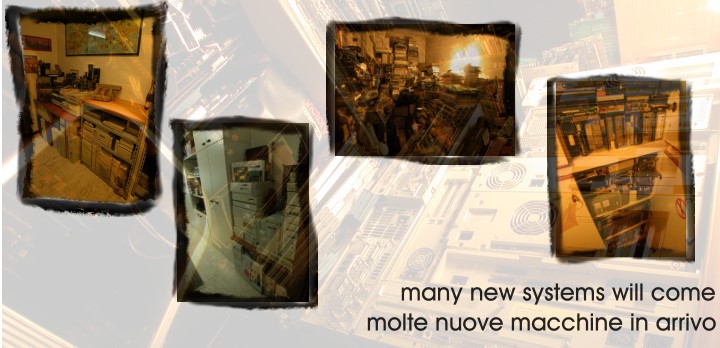
Una doverosa premessa: l'aspetto del sito è volutamente e dichiaratamente "vecchia scuola" o, se preferite, vintage. Ho testato personalmente la corretta visualizzazione con browser datati. Seconda premessa: come l'abitazione del sottoscritto è "un poco" (giusto un poco) in confusione. Mi rimetto alla pazienza del visitatore e spero comunque che proprio per questa sua caratteristica dia soddisfazione almeno a quelli ai quali, come a me, piace rovistare in cumuli di materiali alla ricerca di qualcosa di interessante. Non si dice forse che chi cerca trova?
Ho incominciato ad interessarmi alla storia dell'informatica ed a quella dei microprocessori nel 1994. Più o meno nello stesso periodo ho iniziato la mia collezione di "hardware obsoleto", cioè di componenti, schede e macchine complete. Nel corso di questi anni ho raccolto una quantità di materiali che vanno in gran parte dagli anni Cinquanta fino alla fine degli anni Novanta. In questo sito potete vederne solo una parte relativamente piccola: mancano, ad esempio, i dischi rigidi (ne ho circa 400 "d'epoca", dalle unità a 14 pollici fino a quelle moderne a 3,5'') e le altre memorie di massa, i vecchi libri dedicati all'architettura dei calcolatori ed i manuali, molti computer completi ed una quantità di schede e circuiti integrati, dal momento che per ragioni di tempo e spazio ho scelto di pubblicare solo le foto dei pezzi storicamente più interessanti. Il mio sogno - chi mi conosce lo sa bene - sarebbe realizzare un vero museo, ordinato e visitabile, liberando così da scatole, cantine, garage e soffitte vari i circa 5.000 pezzi della mia raccolta. Il modello ideale è per me il bellissimo Museo della Grande Guerra di Kotschach-Mauthen (vedi), che pur non avendo nulla a che vedere con la storia dell'informatica è a mio avviso un perfetto esempio di come andrebbe organizzato e gestito un museo in modo tale da renderlo vivo ed interessante per tutti. Un altro museo privato che mi piacerebbe prendere come modello è il museo di storia dei telefoni allestito in una stazione ferroviaria dismessa di Amburgo, il cui sito Web oggi purtroppo non è più in linea. Nell'attesa di trovare spazi (e fondi) per un'operazione del genere, continuo ad ingrandire un poco per volta la collezione, badando soprattutto ai pezzi più rappresentativi dell'evoluzione e dei reali utilizzi dei computer, e volutamente tralasciando le rarità fini a se stesse. So benissimo che tutti noi collezionisti ci portiamo dentro il desiderio di avere "il pezzo che nessun altro ha": aspirazione legittima, non c'è dubbio, ma il mio obiettivo è raccontare la storia dell'informatica, non mettere insieme una raccolta di oggetti unici. Allo stesso modo io non intendo essere un puro e semplice collezionista di chip (CPU, microprocessori, chiamateli come volete): li raccolgo in funzione della loro importanza storica, non in base alla rarità od all'aspetto più o meno inconsueto. Questa mia collezione è cominciata proprio pensando alla storia dei microprocessori, come dice il nome stesso del museo. UMMR, Utinensis Museum of Microprocessor Revolution, è un acronimo bilingue inglese/latino. L'inglese, banalmente, è la lingua "ufficiale" dell'informatica. Il latino è un omaggio al Liceo scientifico G. Marinelli di Udine che ho frequentato e che mi è rimasto nel cuore: un po' di nostalgia ci vuole... Poi, col passare degli anni, si è man mano estesa a coprire la storia del calcolatore elettronico in senso più generale. Attualmente UMMR è un museo (diciamo ancora un museo virtuale) dalle molte facce: accoglie materiali fra loro molto diversi, ma non si focalizza esclusivamente su nessuno di essi. L'unico filo conduttore che lo attraversa tutto è, come ho detto, la storia dei computer. Oggigiorno l'interesse per la storia dell'informatica, inizialmente concentrato soprattutto negli Stati Uniti, si è diffuso anche in Europa e negli altri continenti. L'Italia non è da meno: ci sono tanti appassionati e belle iniziative portate avanti sia da enti ed Università (es.: http://www.fondazionegalileogalilei.it/museo/museo.html) che da privati volonterosi (ad es.: http://www.museoinformatica.it/). A tutto ciò si aggiunge il crescente interesse per il retrocomputing, come ci si può facilmente rendere conto osservando il buon numero di mostre, incontri di scambio, piccole manifestazioni che ogni anno si organizzano su questa tematica. Lo sviluppo di Internet e dei social network ha ampliato moltissimo le opportunità per gli appassionati di conoscersi, comunicare, scambiare esperienze ed informazioni. Quando ancora i motori di ricerca non esistevano o muovevano i loro primi passi era molto difficile, alle volte impossibile, reperire notizie dettagliate su macchine o loro parti non più in commercio, senza contare che l'amato/odiato Ebay è diventato un formidabile mercato di materiali storici affiancandosi ai tradizionali canali dello scambio, delle fiere e dei "rottamai". Negli anni Novanta certe informazioni si potevano trovare solamente su vecchi libri e riviste del settore, a patto di riuscire a scovare una biblioteca che le avesse conservate (l'Università di Udine, ad esempio, aveva in catalogo tutti i numeri di Byte). Oggi cercare e trovare notizie su hardware vecchio di decenni è molto più facile; centinaia di collezionisti in tutto il mondo pubblicano foto e dati nei loro siti e tutti possono essere raggiunti via Web. Mi auguro quindi che l'interesse per la storia dell'informatica continui a diffondersi, assieme alla consapevolezza che salvare dalla distruzione le macchine di un tempo significa preservare le testimonianze di un'evoluzione non solo tecnologica ma anche sociale, che ci ha condotto in pochi anni dalla carta e penna al mondo iper-connesso nel quale, voglia o no, viviamo i nostri giorni.
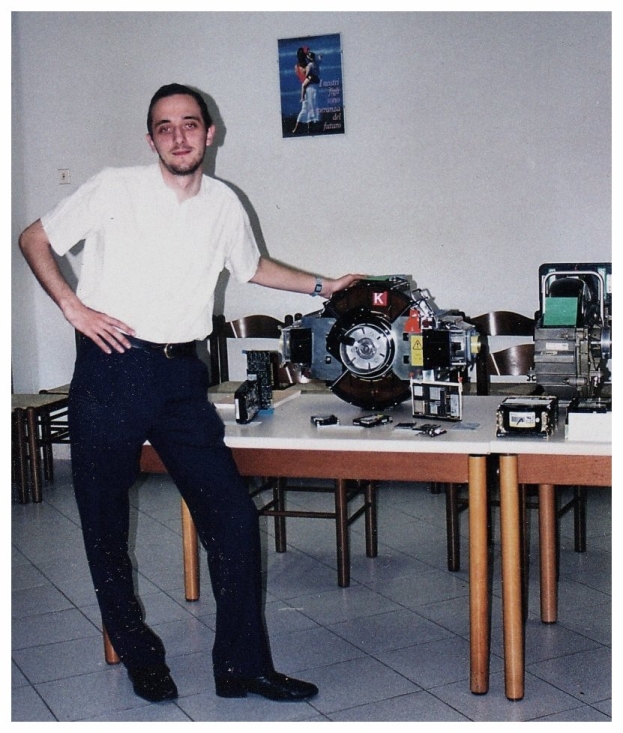
Eccomi qua nel lontano 1999 (perbacco, una foto del passato millennio!) alla prima mostra che ho organizzato a Udine con i miei vecchi dischi rigidi. Detto che senza barba faccio fatica a riconoscermi, nella foto tengo la mano su un IBM 3380; a destra c'è un IBM 3370, a sinistra il complesso disco+controller di un IBM PS/2 Modello 50. A destra in basso un IBM 0681 "Redwing" del 1988: questo disco ESDI da 857 MB è stato il primo hard disk commerciale ad usare la tecnologia PRML. Detto per inciso il 3370 è stato il primo disco con testine thin-film. Se vi interessa un po' di storia dei dischi IBM l'immancabile pagina di Wikipedia vi può dare una mano: http://en.wikipedia.org/wiki/History_of_IBM_magnetic_disk_drives. E chi legge più le enciclopedie di carta?
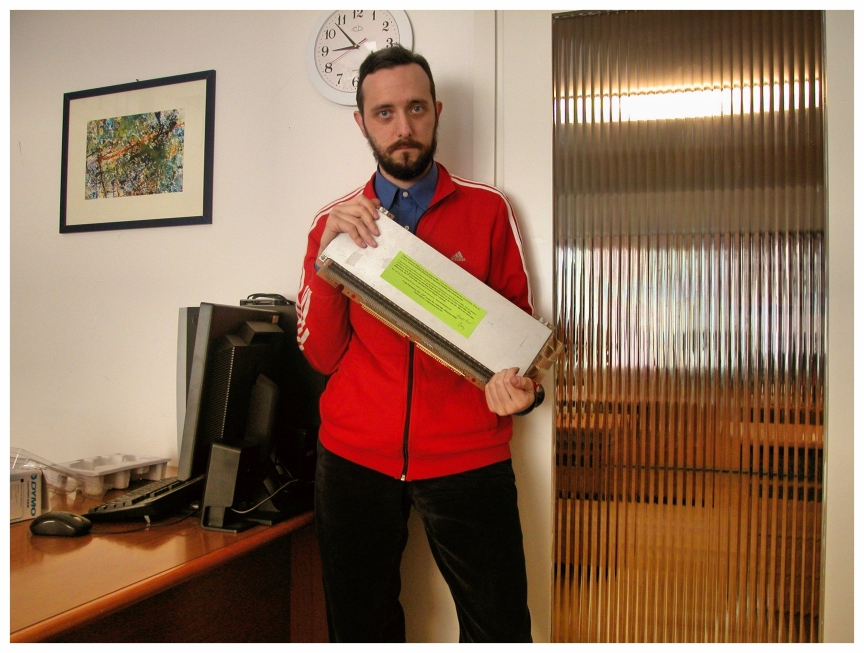
Passa il tempo, crescono barba e museo, qui è arrivato il 2011 ed ho in mano un'unità di memoria plated-wire appartenuta ad un computer UNIVAC 1110. Per quanto possa sembrare strano questo tipo di memoria, sviluppato negli anni Cinquanta, è stato utilizzato ancora nel 1990 nel computer di controllo del telescopio spaziale Hubble. D'altra parte anche le memorie a nuclei magnetici hanno avuto vita lunga nel settore aerospaziale, principalmente perché molto resistenti ai disturbi elettromagnetici ed alle radiazioni, ovviamente più intense nello spazio che sulla Terra. Detto per inciso il PC alle mie spalle è un HP/Compaq XW6000, una delle workstation Xeon che più mi piacciono, assieme all'IBM Intellistation Z Pro 6221.
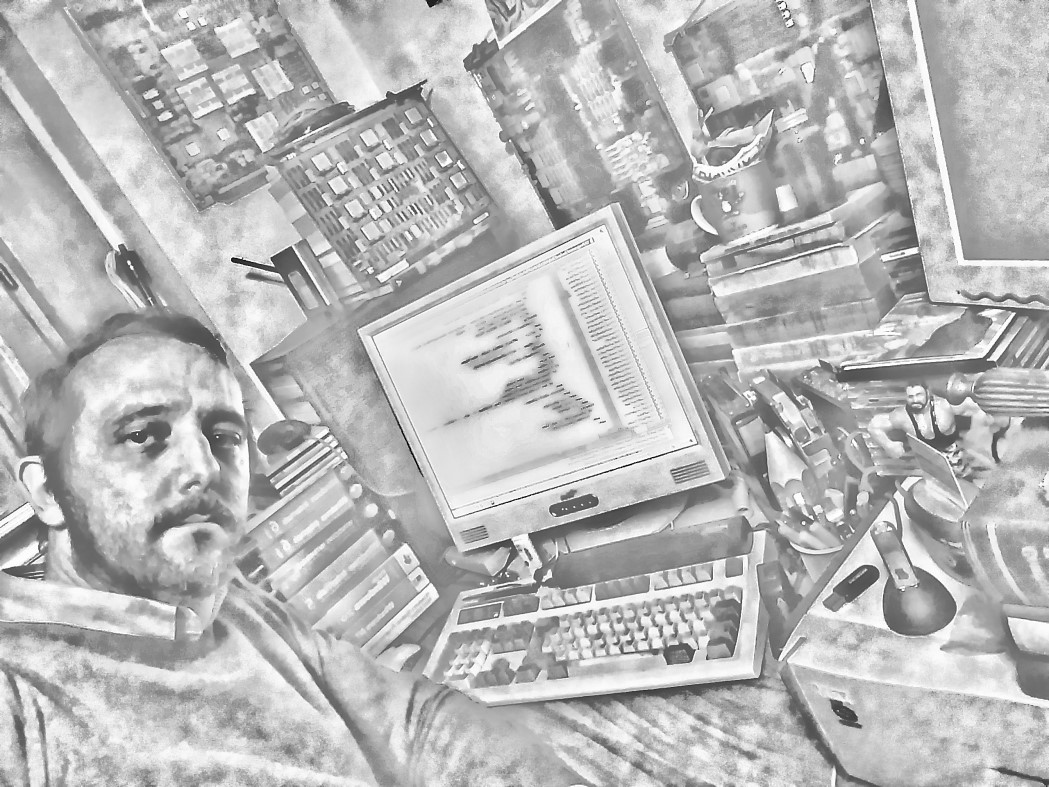
Al lavoro con la mia workstation preferita, una macchina IBM PC365 con doppio Pentium Pro a 180 MHz, predecessore della famiglia Intellistation.
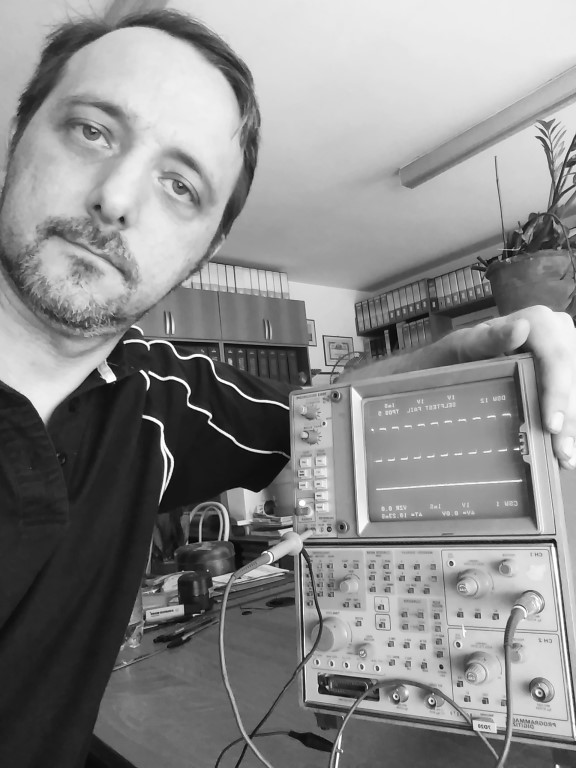
Con uno dei miei ultimi restauri del 2019 (Tektronix 7D10).
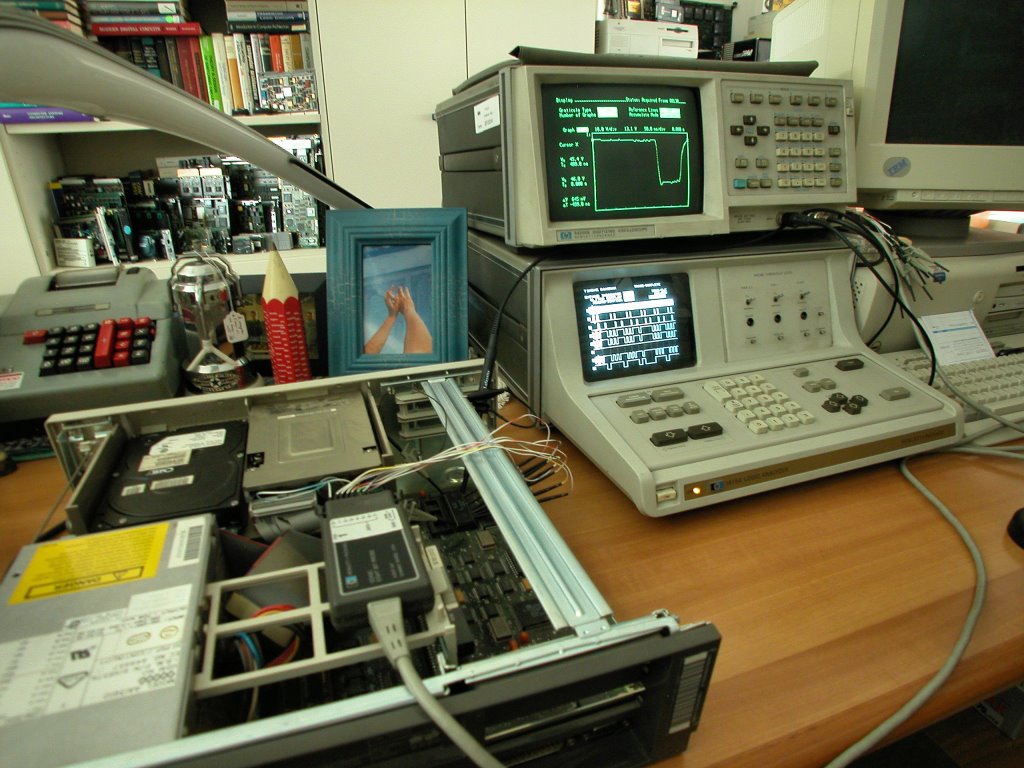
Un IBM PS/2 Modello 30 in restauro po' di anni fa (dovrebbe essere il 2007 o giù di lì). L'analizzatore logico è un HP 1615A, l'oscilloscopio un HP 54100.
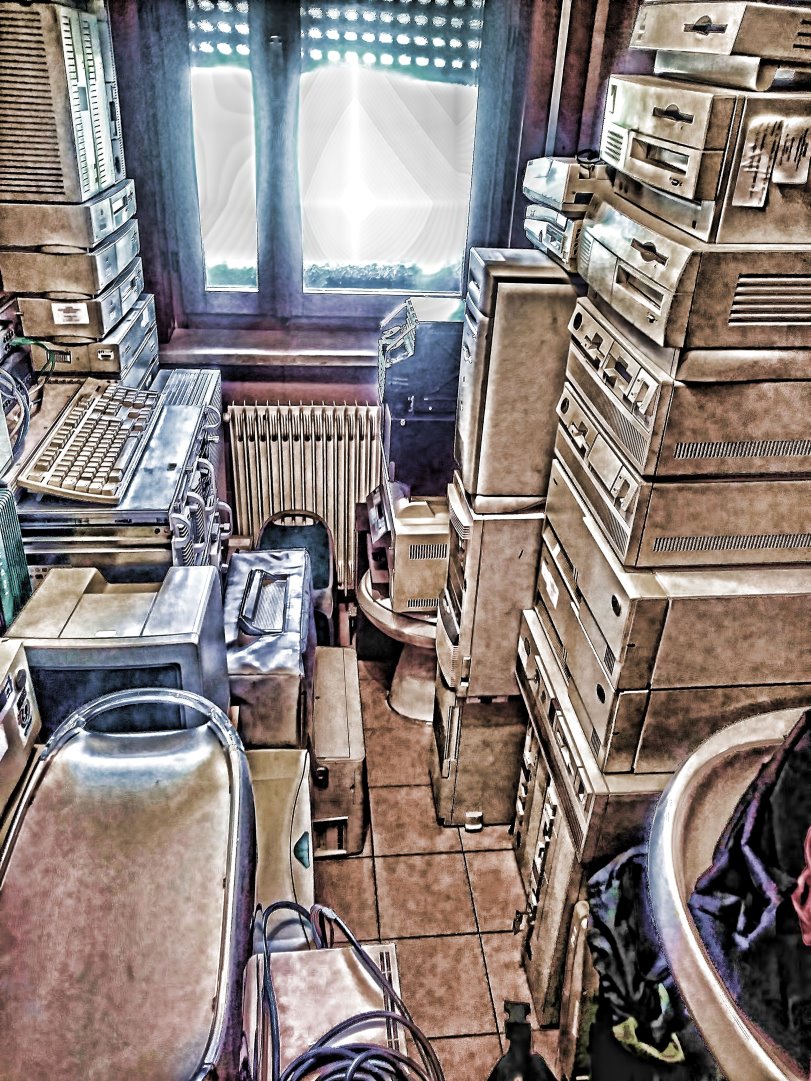
Alcune macchine della mia collezione ospitate temporaneamente in un bagno perché in soffitta entra acqua dal tetto!
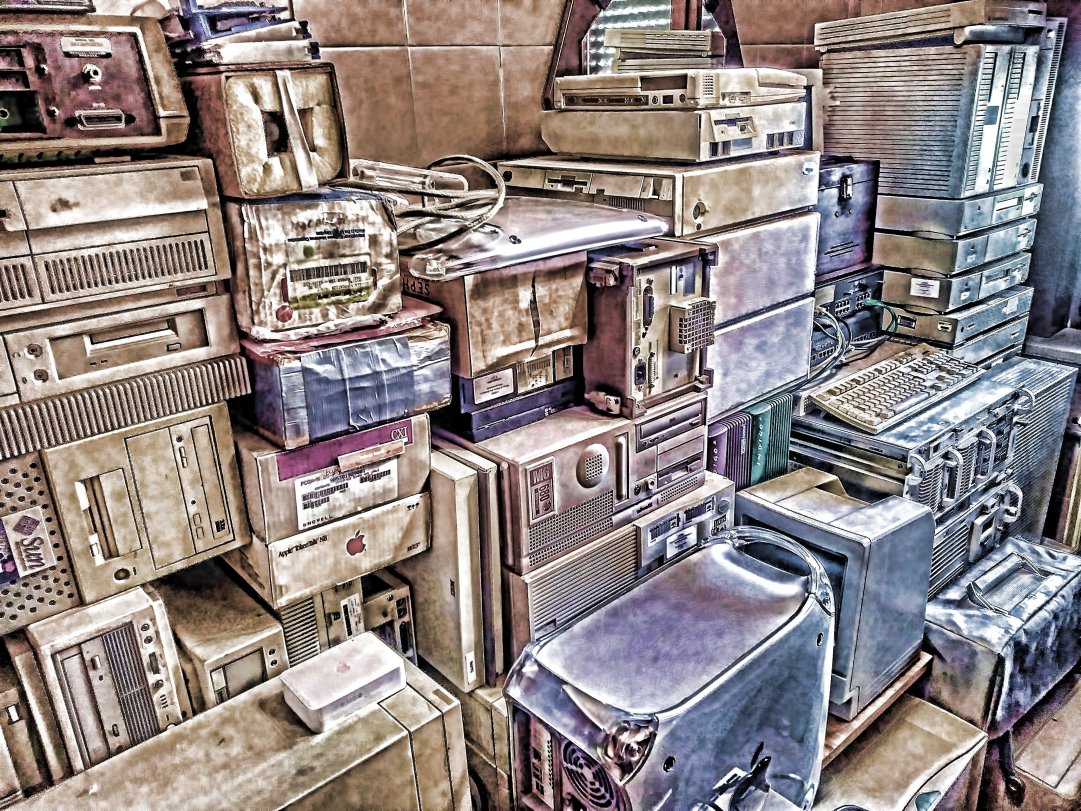
Un'altra veduta "artistica" del bagno più informatico d'Italia!
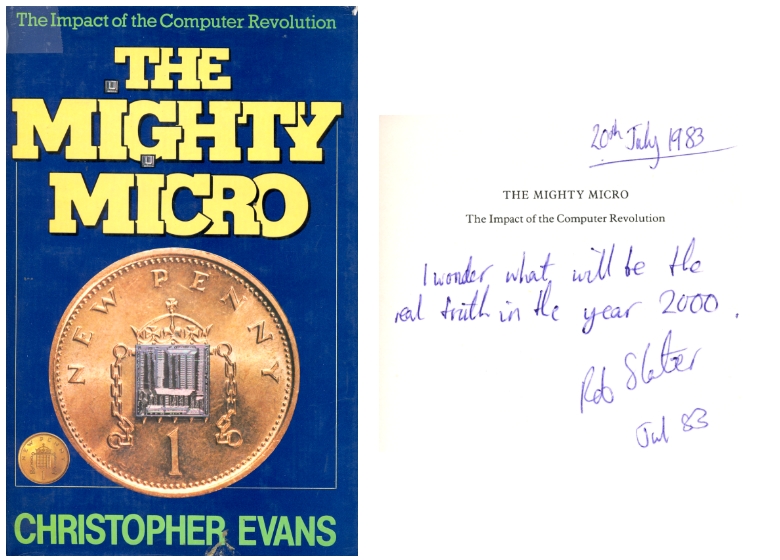
"The Mighty Micro - The Impact of the Computer Revolution" di C. Evans (1979) è un libro (tradotto in italiano col titolo "Micro - La rivoluzione dei Personal Computer"), scritto durante i primi anni del boom dei microprocessori, in cui l'autore descrive l'avvento della microelettronica come una vera e propria rivoluzione non solamente tecnologica, ma anche e soprattutto sociopolitica. Secondo Evans entro il 2001 la società intera sarebbe stata profondamente cambiata, in quasi tutti i suoi aspetti, dalla massiccia diffusione dei personal computer. Benché alcune delle sue previsioni si siano rivelate errate (ad esempio quella secondo cui nel 2000 la settimana lavorativa media sarebbe stata di sole 20 ore e si sarebbe andati in pensione al massimo a 50 anni), Evans ha correttamente inquadrato la portata e la natura dei cambiamenti introdotti dalla penetrazione dei microprocessori in tutti i campi della vita quotidiana. Sulla destra, il commento del proprietario originale del libro: "mi domando quale sarà l'effettiva realtà [verità] nell'anno 2000 (Luglio 1983)". Noi che l'abbiamo vissuta possiamo dire che è andata addirittura oltre le previsioni dell'autore.
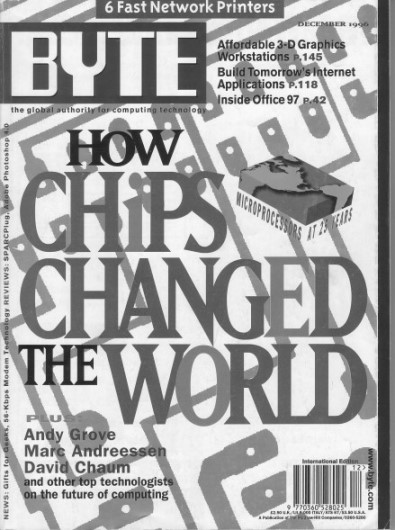
Come i chip hanno cambiato il mondo: la copertina del numero di Dicembre 1996 della famosa rivista Byte, dedicato ai primi 25 anni di vita dei microprocessori, ricorda che la rapidissima evoluzione delle tecnologie microelettroniche ha rappresentato una vera e propria rivoluzione non soltanto per l'informatica ma più in generale per il nostro stesso modo di vivere.
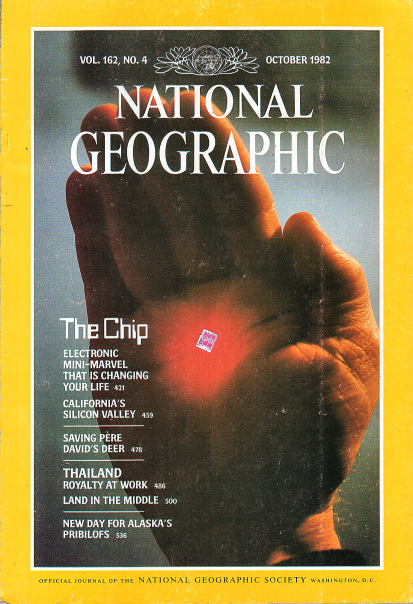
Copertina del numero di National Geographic dell'Ottobre 1982 dedicato alla "rivoluzione microelettronica".
Il sito
Questo sito web ha innanzitutto lo scopo di far conoscere i pezzi più interessanti della mia collezione, poiché a causa della mancanza di spazio il 90% di essi se ne sta chiuso in scatola in cantina o soffitta e nessuno può vederli. Non rappresenta perciò un catalogo né un'esposizione di tutti i materiali in mio possesso ma soltanto una vetrina per un certo numero di essi, quelli che credo siano più interessanti o più insoliti o più rappresentativi di un'epoca o una particolare tecnologia. Attualmente, ad esempio, mancano del tutto i numerosi dischi ed altri tipi di memoria di massa che ho recuperato nel corso degli anni così come non compare buona parte dei computer che ho restaurato e sto restaurando. In alcuni casi alle immagini si accompagnano notizie storiche e/o tecniche riguardanti gli oggetti raffigurati. Se nelle pagine di questo sito trovate notizie che vi possono essere utili, ricordate che i testi (come ricordato in basso) sono liberamente utilizzabili e riproducibili purché non a scopo di lucro. Questo è un sito no-profit ed è richiesto che i materiali in esso contenuti siano utilizzati con la stessa modalità, citandone la provenienza. Gli articoli storici sono stati redatti con cura, citando le fonti (solitamente in forma di collegamenti a siti web, più facilmente consultabili) impiegate. Se però state pensando di utilizzare in qualche vostro progetto o ricerca informazioni e dati trovati in queste pagine, tenete presente che 1) non sostituiscono in alcun modo la documentazione ufficiale dei fabbricanti e 2) l'errore è sempre in agguato... attenti... Quanto alle immagini, si riferiscono quasi tutte ad oggetti facenti parte delle collezioni del museo, e sono state realizzate in proprio. Ciò significa che siete liberi di utilizzarle come volete purché come sopra ricordato rimaniate in un ambito no-profit (cioè non commerciale). La dimensione delle immagini di questo sito è medio/piccola; versioni più grandi possono essere richieste via mail (vedi sotto). I link a questo sito sono liberi. Infine ricordiamo che i materiali raffigurati non sono in vendita. Se vi interessano scambi di materiale, contattateci nel forum di cpu-world.com (vedi sezione Collegamenti).
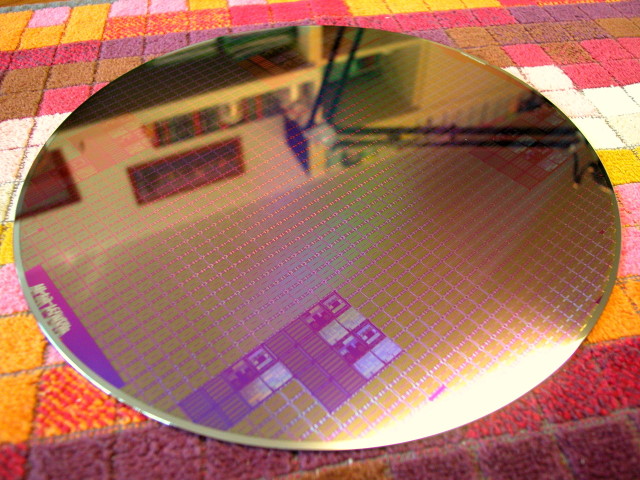
Wafer da 8 pollici contenente chip di memoria DRAM da 256 kbit ancora da suddividere. L'area scura in primo piano è una zona di prova per la verifica della correttezza del processo di fabbricazione.
Attenzione: questo non è un sito di autentico retrocomputing, perchè per quanto mi piacciano i vecchi computer e mi piaccia ancora di più recuperarli, restaurarli e magari utilizzarli, mi interesso innanzitutto della loro storia ed evoluzione tecnologica. Il mio museo è dunque una raccolta di materiali (componenti, macchine, libri, software ecc.) che vuole mostrare in che modo si sono evoluti gli elaboratori elettronici nel corso degli anni. Se state cercando informazioni utili per il restauro di vecchi computer questo potrebbe quindi non essere il posto più adatto a voi, anche se una rapida visita potete farla ugualmente!
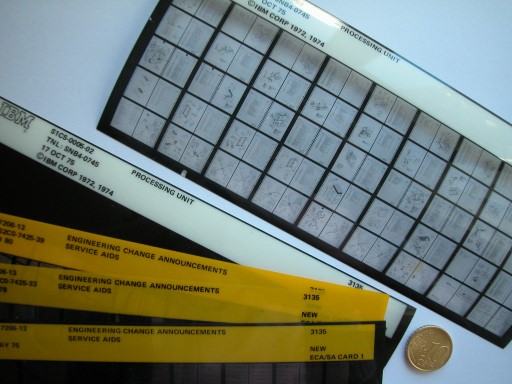
Schemi, manuali ed informazioni tecniche riguardanti i calcolatori IBM System/370 (primi anni Settanta) contenuti in microfiche.
Per finire, una raccomandazione: se state leggendo questa pagina e non ci siete capitati per caso, probabilmente anche a voi piacciono i vecchi computer e non ne buttereste uno in discarica a cuor leggero; se invece siete interessati solo all’ultimo grido della tecnica informatica, cercate di non distruggere le vostre vecchie macchine, che meritano una sorte migliore del cassonetto! Anche se forse non ve ne rendete conto, esse sono già ora delle preziose testimonianze storiche. Il numero degli appassionati di retrocomputing è (fortunatamente) in aumento anche in Italia e non è impossibile trovare qualcuno al quale potrebbe interessare un "antico" computer. E comunque ricordate: mai gettare in una comune discarica apparecchiature in disuso: oltre ad essere giustamente proibito per legge è un gesto di grande disprezzo per l’ambiente perché la "spazzatura elettronica" è molto inquinante (vedi) e va smaltita in siti appositi oppure presso ditte specializzate. Tenete infine presente che oggi c'è anche la possibilità di donare i PC in disuso ad associazioni non profit che li riutilizzano nei Paesi in via di sviluppo.
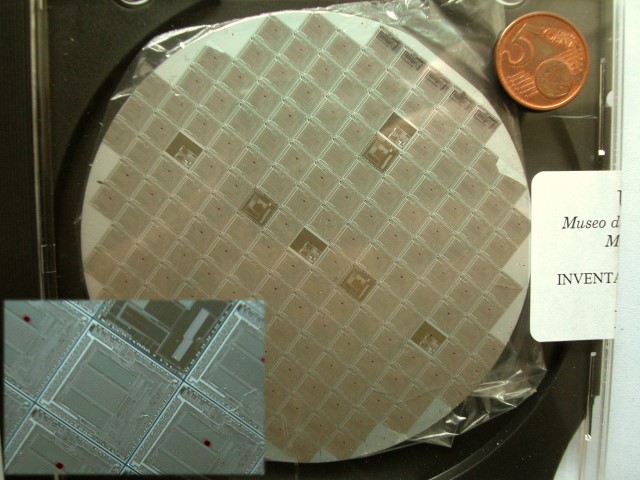
Wafer Western Electric con circuiti integrati ancora da suddividere scartato per l’alto numero di componenti difettosi (identificati durante il test con un puntino di inchiostro rosso)
Il museo
Lista delle novità - Additions' list/chronology: moved to this page! **No longer updated since 2/2014 - check individual pages!**
Pagine attive ed aggiornate - Active and costantly updated pages
l museo in (circa) venti immagini - Short photo-tour of my collection
Prima dei microprocessori (pag. 2) (pag. 3) - Vintage computer technologies (before the advent of the microprocessor, and processor building technologies)
Modulo logico a tubi elettronici della CPU di un calcolatore IBM 704 (1958)
Blocco di memoria BIAX - BIAX storage module
SS-18/R-36M missile guidance computer magnetic ROM - Calcolatore degli effetti delle esplosioni nucleari (URSS)
Blocco di schede logiche di un computer sovietico Argon-10M - Modulo logico ibrido del computer di bordo della stazione spaziale MIR
Intel corporate humour/April's Fools booklets 1985-1991
Un po' di vecchio hardware Olivetti!
Alcuni PC laptop e trasportabili acquisiti di recente (IBM PC Convertible, IBM PS/2 P70 386, NEC APC IV...)
Schede interessanti/Interesting cards
Schede
di memoria RAM dal 1975 al 1990 circa 
Various **interesting** chips, CPUs, cards, boards etc. (pag. 2) - Miscellaneous items from my museum, mostly CPUs, chips and cards
Schede
CPU Sun SPARC V7
- Sun
Enterprise 10000 CPU (system) board
Avionica
- Flight Data Recorder (scatole nere) e FDAU - Transponder
IFF Mark X NATO (TR.4585)
Memorie a nuclei magnetici (ordinary core memories and various uncommon magnetic memories: thin film, core rope...)
Tubi di memoria elettrostatica e non solo (electrostatic storage tubes and more) - Tubi speciali per flying-spot scanner
Processori
DEC e CPU Alpha - Various
DEC (PDP, VAX) and Alpha CPUs/cards - VAX 9000 MCU
Alcune CPU poco note - Weird and forgotten CPUs
Prima del Pentium - Examples of vintage Intel CPUs (from 8008 to 80286)
Curiosità e stranezze: sistemi 386/486 (pag. 2, pag. 3) - Unusual/interesting i386/i486 chips & systems
Pagine attive ma aggiornate di rado - Not so frequently updated pages
Sistemi Pentium "antichi" o particolari - Vintage Pentium systems
Intel i860 (80860)
SGI/MIPS R8000
Pagine non più aggiornate - "Abandoned" pages (no longer updated nor maintained)
Sistemi x86 completi: trasportabili, laptop, notebook - x86 portable systems
Personal computer EISA - EISA personal computers
Workstation, parte prima -Workstations, part I
HP Kittyhawk PSM - C3013A
IBM PS/2 Modello 70 486 (8570-121) e motherboard MCA dei PS/2
IBM PS/2 Modello 90 XP486 (9590-OLA)
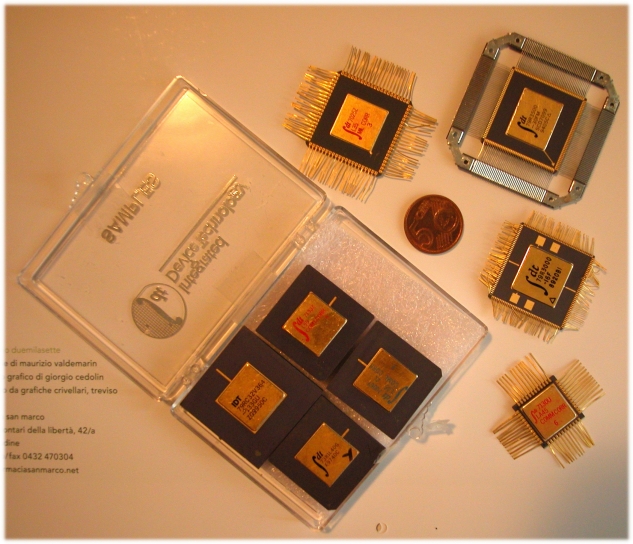
Scatola contenente engineering sample IDT della CPU R3000 e di alcuni suoi chip di supporto.
CPU World, probabilmente il miglior sito per i collezionisti e gli appassionati di microprocessori, e il suo forum
Chipdb.org, database di immagini di CPU provenienti da collezionisti di tutto il mondo... per vedere alcune CPU della collezione di UMMR, fate clic su "Advanced search" in alto a destra nella pagina iniziale, quindi inserite "UMMR" nel campo "Search by Username".
Museo del Computer (http://www.museodelcomputer.org/), grande collezione di computer ed altre apparecchiature informatiche storiche. Vale la pena darci un'occhiata...
ComputerMuseum.it (http://www.computermuseum.it/), uno tra i migliori siti italiani dedicati al retrocomputing.
Museo dell'Informatica Funzionante di Palazzolo Acreide (vedi).
Mateureka - Museo del Calcolo di Pennabilli (vedi).
The Digibarn Computer Museum: http://www.digibarn.com/.
The Jim Austin Computer Collection: http://www.computermuseum.org.uk/.
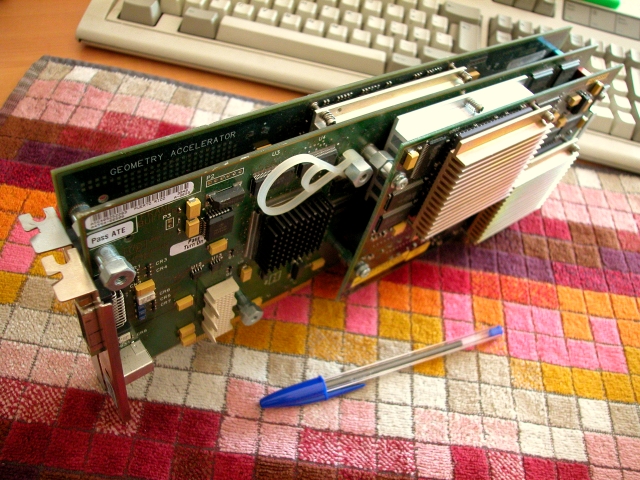
Scheda grafica HP Visualize FX4+ (1998/9). Era un prodotto di fascia molto alta dedicato ad un’utenza professionale, progettato in modo specifico per essere impiegato con software di progettazione tridimensionale basati su OpenGL. Il "cuore" di questa scheda sono due CPU di tipo RISC derivate dall’HP PA-RISC 7300 che effettuano i calcoli di geometria. Per quanto grande (e lenta) rispetto alle attuali schede grafiche, è un buon esempio di come l’evoluzione dei microprocessori abbia reso possibile la realizzazione di workstation personali dalle prestazioni un tempo riservate a sistemi enormemente più grandi.
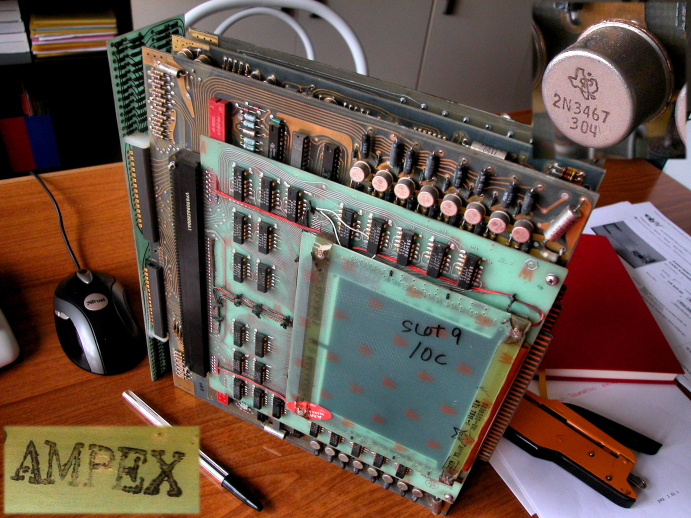
Per contrasto con la scheda HP Visualize, osservate questa memoria a nuclei magnetici da 8+8 KB fabbricata da Ampex (dettaglio in basso a sinistra) ed impiegata, nel 1973, in un terminale grafico ad alta risoluzione (per l'epoca) Data General DDG-9, commercializzato da Hazeltine Ltd. ed utilizzato per applicazioni di CAD e progettazione assistita da computer, come front-end di calcolatori quali l'IBM System/360 e 370. Si noti che il DDG-9 impiegava 5 di questi moduli, e precisamente 2 per i font e 3 per la grafica bitmap: la quantità totale di RAM era superiore a quella di molti minicomputer di quegli anni, ma comunque circa di due ordini di grandezza inferiore a quella della scheda HP.
UMMR è stato fondato e viene gestito da Paolo Cuzzit.
Indirizzo di posta elettronica del museo: ummr@live.it
Indirizzo di posta elettronica dell'amministratore: studiocuzzit@alice.it
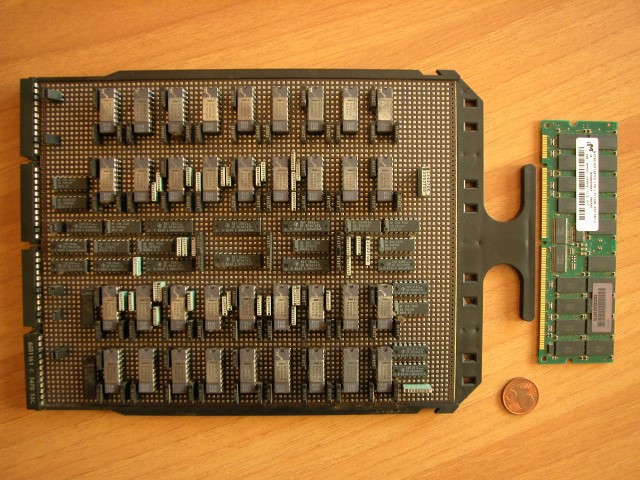
Poco meno di vent'anni separano queste due memorie: l'IBM a sinistra è del 1983 ed ha una capacità di 64 KB; la DIMM a destra è stata fabbricata da Micron Technologies Inc., per la stessa IBM, nel 2002. La sua capacità è di 1 GB. Considerando 1 GB = 1.024 MB ed 1 MB = 1.024 KB, la DIMM ha una capacità 16.384 volte superiore all'altra scheda... Questa immagine dà un’idea di quale sia stata l’evoluzione della microelettronica negli anni Ottanta e Novanta.
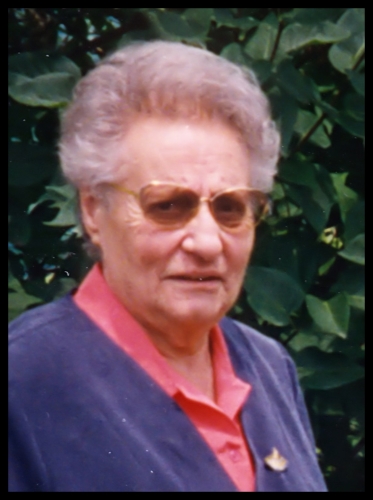
This museum will be forever dedicated to beloved memory of my grandma
ANNA DE LORENZO ved. FURLAN
31.X.1915 - 2.VI.2012
who greatly helped the birth and the expansion of all these collections in the past 20 years.
We miss You so much, Anna, but we know You are now alive and well in Heaven.
We will never forget your way of life: "tomorrow can be better than today".
Your legacy of love, hope and faith will remain in our hearts forever.
Someday we will all be together for Eternity.
"Venite, benedetti del Padre mio, ricevete in eredità il Regno preparato per voi fin dalla fondazione del mondo" (Mt 25, 34)

(dal 6.10.2008)
(dal 11.1.2011)

Questo sito utilizza icone create da Axialis Team: http://www.axdn.com/, da Eugene Buzuk: www.IconDrawer.com e da Bruno Maia - IconTexto: www.icontexto.com. Le immagini utilizzate nelle pagine di questo sito, ove non altrimenti specificato, sono realizzate in proprio e raffigurano materiali di proprietà del museo. Queste immagini possono essere liberamente riprodotte ed utilizzate purché non a scopo di lucro. Versioni ad alta risoluzione possono essere richieste all'indirizzo ummr@live.it. I testi sono stati preparati e curati in proprio; come le immagini essi sono liberamente riproducibili ed utilizzabili. Non se ne garantisce l'accuratezza tecnica.
Imprint
Questo sito è stato creato e viene mantenuto da:/This website has been created and is managed by:
Paolo Cuzzit (autore, responsabile del contenuto/author, responsible for the content)
Via Podgora, 24/2
33100 Udine (UD) - ITALY
Telefono/phone: +39.0432.480762
Email: studiocuzzit@alice.it
Paolo Cuzzit | Crea il tuo badge
Marchi registrati/Trademark
information
Tutti i marchi registrati ed i loghi sono di proprietà delle rispettive
aziende, e vengono riprodotti unicamente a scopo informativo. All
trademarks and logos are property of their respective owners. They are used for
identification and informational purposes only.
Nella realizzazione di questo sito
l'autore ha impiegato materiali protetti da copyright solamente ove necessario,
ed indicando comunque i titolari di tali diritti. The
author intended not to use any copyrighted material for the publication or, if
not possible, to indicate the copyright of the respective object.
Scopo non commerciale e contenuto/Non-profit website,
content
Questo è un sito interamente privato e senza scopo di lucro. Non sono garantite
né la completezza né la correttezza delle informazioni contenute. L'autore non
è responsabile dell'utilizzo delle informazioni contenute in questo sito fatto
tramite collegamenti, citazioni o riproduzione da altri siti e/o pubblicazioni
di qualsivoglia natura. This
is an entirely private and non-profit website. There is no guarantee for
completeness of information, nor for correctness/topicality. The
author is not responsible for any contents linked, referred to or reproduced in
any form from his pages in third-party website or publications.
L'autore
non è responsabile della correttezza, completezza e qualità delle informazioni
contenute in questo sito. Non risponderà dunque di eventuali danni arrecati
dall'utilizzo di informazioni incomplete o non corrette.The
author isn't responsible for the topicality, correctness, completeness or
quality of the information provided. Liability claims regarding damage caused by
the use of any information provided, including any kind of information which is
incomplete or incorrect, will therefore be rejected.
Utilizzo dei materiali del sito/Using material
from this website
Si rimanda a quanto detto nella sezione "Il sito".
You may use any information found on this page for
non-profit purposes. Please use proper quotation techiques or at least make sure
to mention this website as source of information. Using information found on
this page for commercial purposes including all the purposes whose aim is to
earn money is prohibited.
